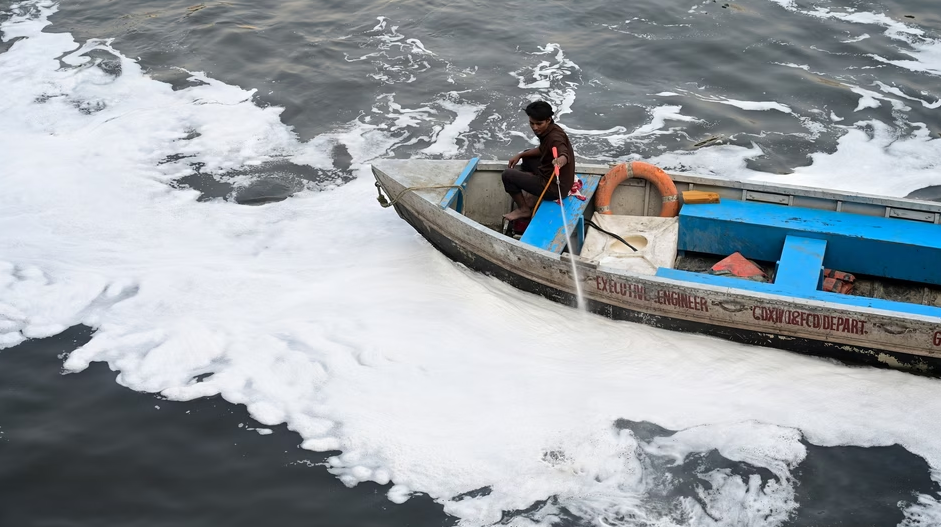
Ammonia concentrations in the Yamuna at Wazirabad have risen to 1.5–2 parts per million (ppm), exceeding the 0.9 ppm threshold at which Delhi’s water supply operations begin to be affected. The increase has raised concerns over the reliability of drinking water supplies, particularly for areas served by the Wazirabad and Chandrawal water treatment plants. Ammonia, a nitrogen-based compound, commonly enters water bodies through untreated sewage, industrial effluents and agricultural runoff. According to Delhi Jal Board (DJB) officials, conventional chlorination systems can handle ammoniacal nitrogen concentrations of approximately 1 ppm; beyond this level, treatment becomes more difficult because chlorination can produce potentially harmful chloramines. To manage the contamination, the DJB is relying on dilution with cleaner water, including supplies from the Munak Canal and the recently restored Upper Ganga Canal. The New Delhi Municipal Council has also reported curtailed production at the Sonia Vihar water treatment plant due to increased pollution in raw water, potentially affecting supply across parts of its command area. The article attributes recurring ammonia spikes to suspected industrial discharge upstream, including concerns over the Panipat industrial drain and the possible intermixing of industrial wastewater and freshwater canals in Sonipat, although Haryana has disputed allegations of pollution leakage from its industrial areas. The problem is particularly pronounced between November and March, when reduced river flows limit the dilution of pollutants. Delhi reportedly experiences around 15–22 ammonia-related episodes annually. Further downstream, the Yamuna faces a much larger pollution burden, with the Najafgarh drain contributing nearly 69% of the pollution load entering the river in Delhi, alongside discharge from other major drains. The river’s 22-km stretch through the capital accounts for approximately 75% of its total pollution, with dissolved oxygen falling to zero at several monitoring points.
Source: https://www.hindustantimes.com/india-news/why-rising-ammonia-in-yamuna-threatens-delhi-s-drinking-water-supply-101794462649799.html