
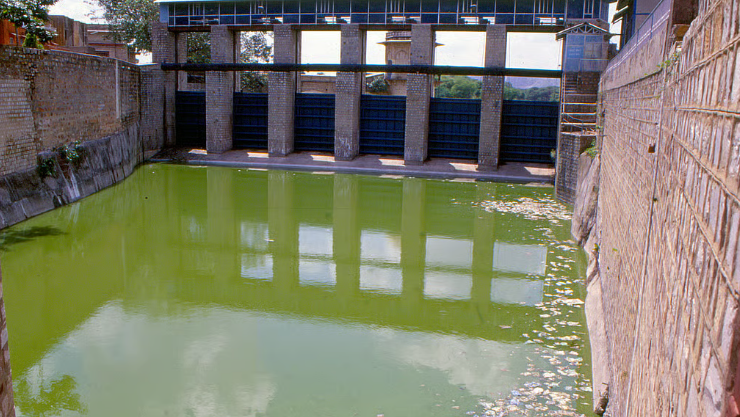
According to the Central Water Commission’s report released on 12 November 2026, India’s 178 major reservoirs recorded a decline of 5.07 billion cubic metres (BCM) in storage within a week, falling from 121.926 BCM on 5 November to 116.854 BCM on 12 November. Reservoirs are now holding 63.25% of their combined usable capacity of 184.762 BCM. Current storage is 29.65% below the corresponding period last year and 19.86% below normal levels. Southern India faces the most severe deficit, with its 50 major reservoirs holding just 39.74% of capacity, nearly 47% below normal. Andhra Pradesh, Telangana and Tamil Nadu have particularly low storage levels, at 27.54%, 33.49% and 36.28%, respectively. Northern India’s reservoir storage is 24.82% below normal, while Maharashtra, Gujarat and Rajasthan are also experiencing drought conditions, with several administrative areas officially declared drought-affected.
Eastern India presents a mixed picture. Although the region’s overall reservoir storage stands at 75.04% of capacity, reservoirs in Assam, Bihar, Meghalaya and West Bengal are holding less than half their usable capacity. Maharashtra’s 305 talukas across 33 districts have been declared drought-hit, while Gujarat has classified 80 tehsils across 14 districts as drought-affected, including 69 severely affected areas. The figures indicate that declining reservoir levels are not confined to one region but reflect uneven and increasingly stressed water availability across the country.
Source; https://www.downtoearth.org.in/water/indias-178-major-reservoirs-lose-5-billion-cubic-metres-of-water-in-a-week