
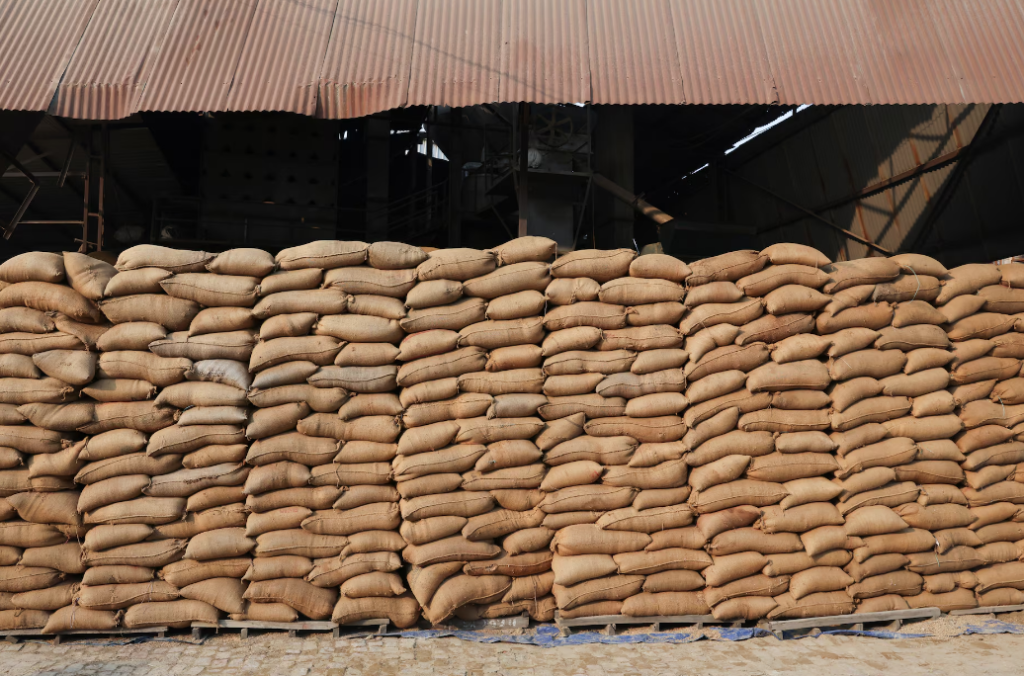
India’s transformation into one of the world’s largest rice producers has created a growing surplus, but it is also generating fiscal, agricultural and environmental concerns. According to Reuters, India’s rice production increased by 50% over a decade, reaching a record 154 million tonnes in 2025–26, against domestic consumption of approximately 107 million tonnes. The expansion has been supported by scientific advances, particularly flood-tolerant rice varieties such as Swarna-SUB1, and a long-standing government procurement and Minimum Support Price (MSP) system. Production growth has been particularly significant in eastern India, with Bihar recording an increase of 182% over 15 years to 8.75 million tonnes in 2025–26. India’s rice exports doubled over a decade to 22.3 million tonnes in 2025, accounting for approximately 40% of global rice trade. However, the growing surplus has increased pressure on government procurement, storage infrastructure and food subsidies. Government rice stocks reached a record 55.47 million tonnes on 1 October 2026, more than four times the prescribed buffer-stock target, while the federal food subsidy bill exceeded ₹2.28 lakh crore in 2025–26.
The report also highlights the economic and agricultural distortions arising from the existing incentive structure. Federal MSP support, combined with additional bonuses offered by state governments, has encouraged continued rice cultivation even in regions where water resources are under stress. The Union Finance Ministry has reportedly urged states to align agricultural incentives with national priorities, citing the strain that water-intensive rice cultivation places on groundwater resources. Meanwhile, the growing emphasis on rice production has contributed to an imbalance in crop diversification, even as India continues to import substantial quantities of oilseeds and pulses. NITI Aayog projections cited by Reuters indicate that rice production could reach 171 million tonnes by 2036, while domestic demand may rise only to 110 million tonnes, suggesting that the surplus could widen further.
Source: https://www.reuters.com/world/how-india-became-rice-powerhouse-why-its-becoming-problem-2026-11-18/