
Researchers at the Indo-French Cell for Water Sciences (IFCWS), IISc, have developed a new framework for agricultural water budgeting that accounts for the contributions of different farmer groups to groundwater extraction and recharge. The study introduces Blue Water Potential (BWP), an indicator that measures the difference between estimated groundwater recharge and irrigation requirements under assumed optimal farming conditions.
Applied to a semi-arid village in Rayalaseema, Andhra Pradesh, the study reveals significant differences between farming systems:
-
Perennial irrigated horticulture: Pomegranate, sweet lime and grape orchards have a strongly negative BWP, consuming approximately 1,000–1,200 mm more water annually than they return to the aquifer.
-
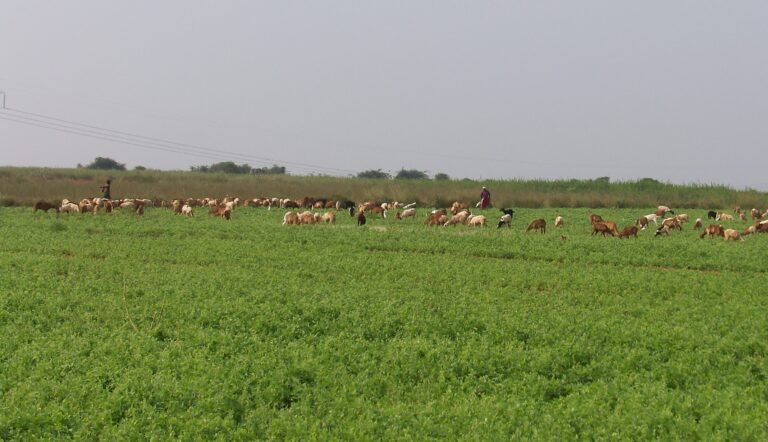
Rainfed agriculture and grasslands: Groundnut cultivation and pastoral grasslands demonstrate a positive BWP of approximately 200–300 mm annually, indicating their potential contribution to groundwater recharge.
-
Unequal distribution of benefits and burdens: An estimated 26% of wealthier farmers account for much of the groundwater-dependent horticultural activity, while poorer rainfed farmers and pastoralists contribute to replenishing the shared aquifer.
The findings raise concerns about Andhra Pradesh’s proposed ₹1 lakh-crore initiative to transform Rayalaseema into the Fruit Bowl of the World. The plan envisages expanding horticultural cultivation from 8.41 lakh hectares to 14.41 lakh hectares. Researchers caution that even a modest expansion of water-intensive orchards at the expense of recharge-supporting land uses could destabilise the region’s groundwater balance. They emphasise the need to assess canal water imports, climate risks and village-level water availability before changing cropping patterns.
The study also provides open-source software to calculate BWP across different cropping systems and geographical areas, potentially supporting more evidence-based agricultural and groundwater planning.
Source: https://www.iisc.ac.in/events/taking-into-account-the-role-of-neglected-farmer-groups-in-recharging-groundwater/