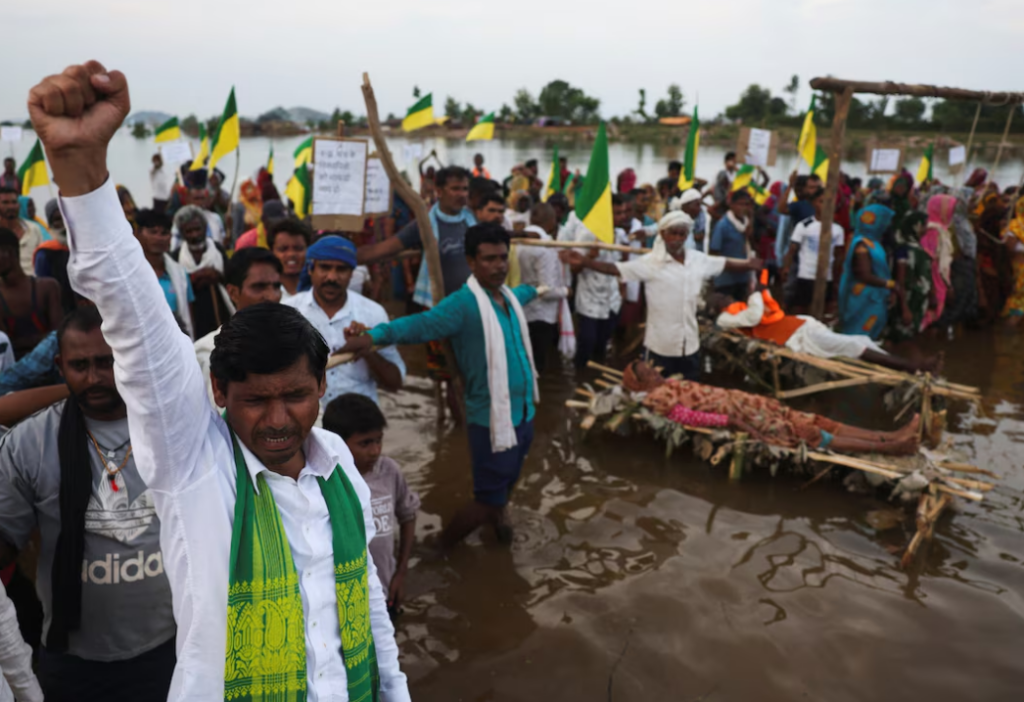
India’s ₹87-billion-dollar river-linking initiative is facing protests from villagers affected by the Ken-Betwa River Linking Project, the first phase of the national plan to connect approximately 30 rivers to redistribute water to drought-prone regions. The project, estimated to cost $4.6 billion, aims to transfer water from the Ken River in Madhya Pradesh to the Betwa River in Uttar Pradesh, strengthening irrigation, drinking water supplies and hydropower generation in the Bundelkhand region. However, residents in Madhya Pradesh’s Panna district have raised concerns over flooding, inadequate compensation and the loss of ancestral homes, livelihoods and religious sites. While the district administration maintains that compensation has been paid to more than 90% of affected people, some villagers argue that the payments do not adequately cover their losses or provide for rehabilitation. Environmental concerns have also emerged over the proposed Daudhan Dam, which is expected to inundate approximately 9,000 hectares of land, including parts of the Panna Tiger Reserve. Critics have additionally questioned the project’s hydrological assumptions regarding water surplus in the Ken basin and deficit in the Betwa basin. The controversy underscores the need to balance inter-basin water transfers and regional water security with scientific assessment, biodiversity conservation, transparent compensation and equitable rehabilitation of affected communities.
Source: Reuters