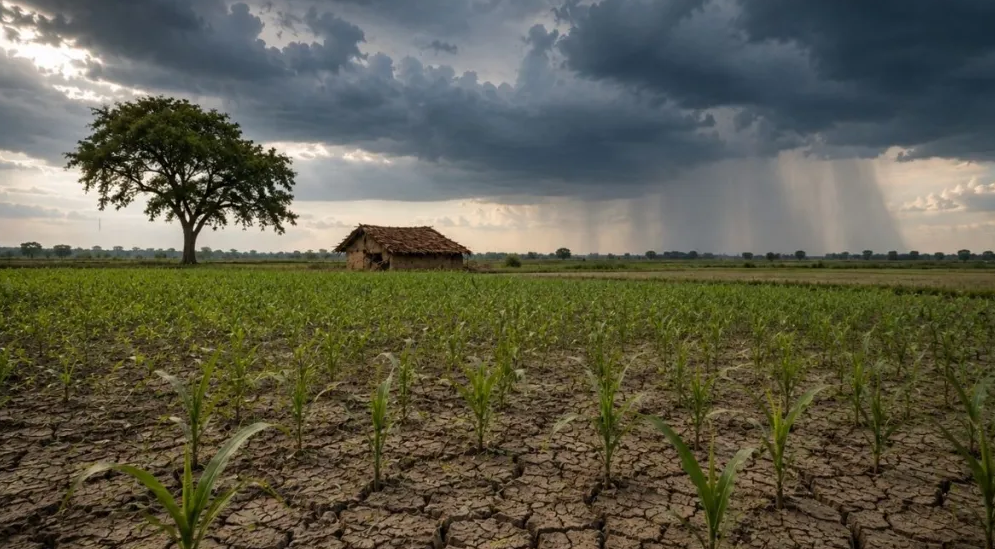
India’s water security challenges are deepening as the 2026 El Niño compounds existing groundwater depletion and rainfall deficits, threatening agriculture, economic stability and food security. The India Meteorological Department recorded a 13% deficit in overall monsoon rainfall in 2026, the largest seasonal shortfall in more than a decade, while the International Research Institute for Climate and Society has projected very strong El Niño conditions through the winter of 2026–27. Reservoir storage across 178 major reservoirs stood at approximately 70% of total capacity at the end of September, raising concerns ahead of the rabi season. India extracted around 256.9 billion cubic metres (BCM) of groundwater in 2025, with nearly 87% used for irrigation. The situation is particularly critical in Punjab, Haryana and Rajasthan, where groundwater extraction has exceeded 100% of the annual extractable resource. The remaining groundwater availability for future use is estimated at just 6.37% in Rajasthan, 10.78% in Punjab and 14.12% in Haryana.
The crisis, however, extends beyond states classified as over-exploited. Uttar Pradesh recorded the country’s highest groundwater extraction at approximately 47.18 BCM, with 88% allocated to irrigation. Groundwater dependency is also substantial in Punjab (95%), Gujarat (93%), Tamil Nadu (92%) and Maharashtra (90%). Around 58% of India’s groundwater recharge comes from rainfall, making agricultural water security particularly vulnerable to erratic monsoons. Maharashtra, despite having a groundwater extraction stage of approximately 51%, extracts nearly 16.38 BCM annually, with 91% used for irrigation and around 64% of gross groundwater recharge dependent on rainfall. These figures demonstrate how even states with relatively lower extraction levels can face serious agricultural water stress when rainfall declines. At the same time, regions such as Assam, Bihar and Uttar Pradesh have experienced episodes of heavy rainfall and flooding, highlighting the uneven distribution of water-related climate risks across the country. India is therefore confronting scarcity and excess simultaneously, requiring stronger regional water planning, storage and resource management.
The economic implications are significant, as 11 of India’s most water-stressed states collectively account for approximately three-quarters of the country’s GDP. Water shortages can affect agricultural output, farm incomes, food supply chains and household water security, adding to inflationary pressures. Food inflation stood at 5.95% in August 2026, while rural food inflation was higher at 6.13%. Although water stress is not the sole driver of inflation, it represents an additional supply-side risk amid wider weather and geopolitical uncertainties. The growing demand from data centres, manufacturing and urban infrastructure will further intensify competition for freshwater resources. With El Niño conditions expected to influence the rabi season and uncertainties extending into the 2027 pre-monsoon period, the article emphasises that India’s development planning must incorporate a comprehensive water budget. Long-term resilience will depend on managing groundwater extraction, strengthening irrigation efficiency, improving rainfall and reservoir management, and aligning economic growth with the carrying capacity of regional water resources.
Source: https://www.financialexpress.com/opinion/foretelling-festive-consumption/4377198/